Your Ultimate Car Paint Protection Guide
Paint protection covers the coatings and films designed to keep your car’s finish looking new — shielding clearcoat from UV, chemical etching, rock chips and everyday contaminants. In Colorado Springs that protection matters more than most: higher altitude increases UV intensity and seasonal road debris raises the chance of chips. This guide breaks down how coatings and films work, compares ceramic coatings, paint protection film (PPF) and traditional wax, and gives practical, Colorado Springs–specific advice to help you keep your finish, cut maintenance, and protect resale value. You’ll learn how ceramic coatings form SiO2-based hydrophobic layers, how TPU-based PPF absorbs impact and self-heals, and when wax or sealants still make sense. We’ll walk through professional application steps, realistic lifespans, maintenance routines, and a decision framework so you can pick the right protection for how you drive. Expect clear comparisons, easy-to-read tables summarizing properties and costs, and local tips for UV, hail and road conditions here in Colorado Springs.
What Is Car Paint Protection and Why Is It Essential in Colorado Springs?
Paint protection includes engineered films and coatings that slow or prevent paint damage by blocking UV, repelling contaminants, and absorbing mechanical impact. Technically, protection combines barrier chemistry with physical resilience to reduce fading, staining and chips. Locally, the benefits are tangible: higher-altitude UV speeds clearcoat oxidation and seasonal debris increases chip risk — so protecting your paint preserves gloss and cuts repainting needs. The right protection also means fewer washes, less polishing and lower long-term maintenance. Knowing your protection goals — whether you want easier cleaning, impact resistance or the deepest gloss — helps you choose the best solution. The next sections explain local climate effects and introduce the main protection categories so you can match a solution to your daily driving habits.
How Does Colorado Springs' Climate Affect Vehicle Paint?
Because of altitude, Colorado Springs receives roughly 25–30% more UV than sea level, which speeds clearcoat oxidation and fades pigments by breaking down polymers in surface layers. Those photochemical effects reduce gloss and weaken protective performance over time. Big temperature swings and long sun exposure can make older waxes and cheaper sealants brittle or microcracked, so modern coatings often last longer. Winter brings road salt and sand that abrade finishes and encourage corrosion where paint is compromised, so targeted protection in vulnerable areas pays off. Cars parked outdoors age faster than covered vehicles, and choosing products with good UV resistance and chemical stability helps mitigate these risks. Below we quickly define the main protection types to set up the comparisons that follow.
What Are the Main Types of Car Paint Protection?
The main options are paint protection film (PPF), ceramic coatings (SiO2-based liquid polymers) and wax or sealants. Each works differently to protect appearance and performance. PPF uses a TPU layer to absorb impacts and prevent rock chips, making it ideal for high-contact areas like hoods and bumpers. Ceramic coatings chemically bond to the clearcoat, creating a hydrophobic, chemically resistant surface that makes cleaning easier and slows oxidation in high-UV environments. Waxes and synthetic sealants lay down a sacrificial layer for short-term gloss and water beading, which is attractive for budget-minded owners or show cars kept indoors. Understanding these mechanisms clarifies the trade-offs in longevity, upkeep and cost that we cover in the rest of the guide.
How Does Ceramic Coating Protect Your Car? Benefits, Application, and Maintenance
Ceramic coating is a liquid polymer rich in silicon dioxide (SiO2) that bonds to paint and cures into a durable, hydrophobic layer. Its main benefits are UV protection, chemical resistance and long-lasting gloss. The coating cross-links on the clearcoat to increase surface hardness and lower surface energy, so water and contaminants bead and roll off. For Colorado Springs drivers that means fewer water spots, slower oxidation under intense sun, and easier winter cleanup when snow and salt would otherwise stick to untreated surfaces. Professional application and routine maintenance maximize lifespan and appearance; the next sections break down the local benefits and step-by-step care.
What Are the Key Benefits of Ceramic Coating for Colorado Springs Drivers?
Ceramic coatings deliver three practical advantages here: stronger UV and oxidation resistance, hydrophobicity that reduces water spots and dirt buildup, and longer-lasting gloss compared with wax. At altitude, the UV protection is especially useful — SiO2 coatings resist UV-driven breakdown and help keep colors vibrant. Hydrophobic surfaces make dirt, salt and brake dust release easier during washes, lowering wash frequency and the risk of abrasive contact while cleaning. Professional coatings can last years depending on product grade and upkeep, offering a longer-term solution than wax while still needing scheduled maintenance to perform at their best.
- Ceramic coatings slow oxidation and fading in high‑UV environments.
- Hydrophobic surfaces reduce water spots and simplify decontamination.
- Longer-lasting gloss cuts down on polishing and helps preserve resale value.
Given Colorado Springs’ sun and seasonal contaminants, ceramic coatings are often a strong match when longevity and easier maintenance are priorities. The next section covers professional application and care routines.
How Is Ceramic Coating Professionally Applied and Maintained?
Pro application starts with thorough surface correction: decontamination, clay barring and paint correction remove swirls and embedded particles so the SiO2 chemistry bonds to a clean surface and delivers an even finish. Installers apply the coating in controlled temperature and humidity conditions so it cross-links and cures correctly, and vehicles typically go through staged cure checks before pickup to ensure long-term performance. Maintenance is straightforward: regular pH‑neutral washes, avoiding high‑heat automatic brushes, and using ceramic‑specific maintenance sprays or hydrophobic boosters to refresh the surface when needed. In Colorado Springs we recommend extra rinses during snowy months to remove salt and scheduling professional inspections after severe weather to catch any edge lift or wear early. If you prefer pro upkeep, Elite Auto Pro Colorado Springs offers maintenance checkups and ceramic refresh services to keep coatings performing.
| Ceramic Coating Property | Mechanism | Practical Benefit |
|---|---|---|
| Hydrophobicity (SiO2 layer) | Lowers surface energy so water beads | Easier cleaning and fewer water spots |
| Hardness (cross‑linked polymer) | Increases scratch and abrasion resistance | Maintains gloss and surface integrity |
| UV resistance | Resists photochemical breakdown | Slows oxidation and color fading |
What Is Paint Protection Film and How Does It Shield Your Vehicle?
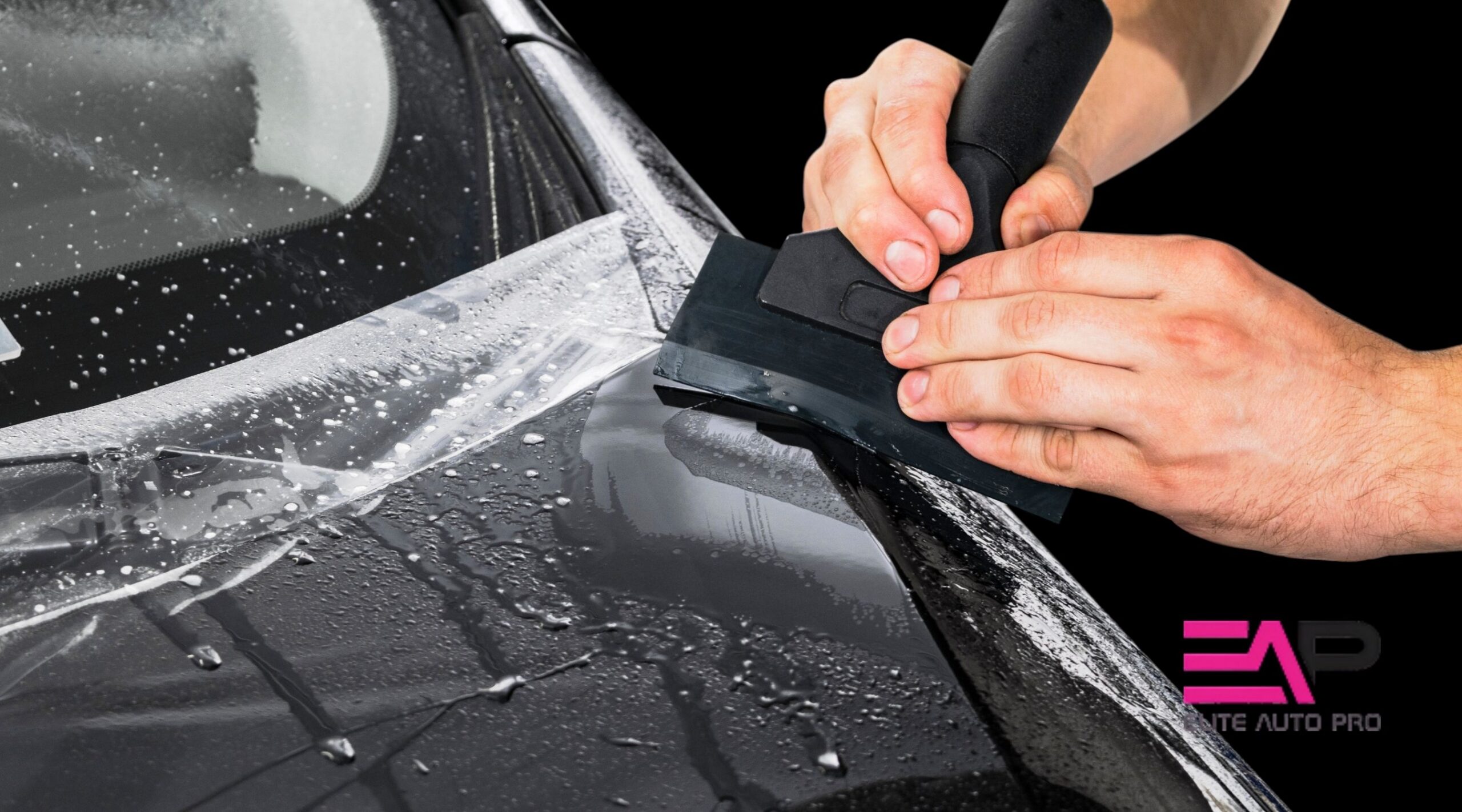
Paint Protection Film (PPF) is a thermoplastic polyurethane (TPU) film applied to vehicle panels as a physical barrier that absorbs impact energy and resists chips, scratches and contaminants. Many PPFs include a self‑healing topcoat that smooths minor abrasions. Because of its thickness and elasticity, the film disperses the force of small stones and road debris, preventing direct damage to the clearcoat and acting as an invisible sacrificial layer on high‑risk surfaces. Finishes range from gloss and matte to colored films, so you can protect your paint without sacrificing appearance. The next sections explain self‑healing technology and practical installation and maintenance so you can judge PPF’s long‑term value.
What Are the Advantages of Self-Healing and Impact-Resistant PPF?
Self‑healing PPF has a topcoat engineered to reflow with gentle heat or sunlight, reducing the appearance of swirl marks and light scratches without replacement. Impact resistance comes from the TPU layer absorbing and spreading kinetic energy from road debris, which dramatically cuts rock chips and scuffs on leading edges and bumpers. High‑quality PPF typically lasts about five to ten years depending on thickness, finish and exposure — a solid long‑term investment for highway drivers. Regular, non‑abrasive cleaning preserves the topcoat, and deep damage can often be repaired by section rather than replacing the whole panel, keeping costs manageable.
- Self‑healing topcoat restores minor marks with heat or sunlight.
- TPU absorbs impact to prevent rock chips.
- With professional care, longevity typically ranges from five to ten years.
PPF is especially attractive for drivers who face frequent debris or want targeted protection in high‑impact zones. Below we cover installation and care best practices.
How Is PPF Installed and Maintained for Long-Term Protection?
Professional PPF installation begins with meticulous surface prep — thorough washing, decontamination and sometimes light polishing — so the film adheres without trapping contaminants that cause blemishes. Installers use precision templates or hand‑cut patterns to fit panels exactly, and careful edge sealing prevents lifting while ensuring the film conforms to curves and creases. Post‑install curing and inspection verify adhesion and finish. Maintenance is simple: gentle washing with pH‑neutral cleaners, avoiding abrasive polishes and harsh solvents that harm adhesives or the topcoat, and periodic professional checks to correct edge lift or deep gouges. Replace sections when adhesive fails or damage is beyond repairable limits; with routine care, PPF will protect your paint for several years.
| PPF Attribute | Characteristic | Protection Outcome |
|---|---|---|
| TPU thickness | Available in multiple mil thicknesses | Improves impact absorption and durability |
| Self‑healing topcoat | Thermally reactive chemistry | Reduces visible light scratches |
| Finish options | Gloss, matte, colored | Protective function with aesthetic choices |
How Do Car Wax and Sealants Compare to Modern Protection Methods?
Waxes and synthetic sealants lay down a sacrificial coating that boosts gloss and gives short‑term water beading, but they work by coating the surface rather than chemically bonding or providing physical impact resistance. Carnauba wax gives a warm, deep shine but usually lasts weeks to a couple of months; synthetic sealants extend protection to several months but still don’t match ceramic coatings or PPF for durability. Waxes are a practical, low‑cost option for garaged, low‑mileage show cars or owners on a tight budget, but they require frequent reapplication and don’t defend well against rock chips or prolonged UV exposure. The next sections list benefits and limits and compare these options so you can balance expectations, budget and use case.
What Are the Benefits and Limitations of Car Wax and Sealants?
Waxes and sealants shine when you want immediate gloss and a simple DIY application. They’re inexpensive up front and look great on well‑stored cars. Their limits: rapid wear under strong UV, weak abrasion resistance and limited chemical stability versus bird droppings or heavy road salt — which can eat through sacrificial layers if not cleaned quickly. Typical lifespans range from a few weeks for natural wax to a few months for quality synthetic sealants, meaning more frequent maintenance and higher cumulative effort for consistent protection. For many owners who store vehicles indoors, this trade‑off is acceptable, but ceramic coatings and PPF outperform waxes when you need longevity and physical protection.
- Delivers instant, high gloss at a low upfront cost.
- Short lifespan and low abrasion resistance limit long‑term protection.
- Frequent reapplication increases lifetime maintenance effort.
These points set up a direct comparison of protection types below.
How Do Wax, Sealants, Ceramic Coating, and PPF Differ?
| Protection Type | Durability | Maintenance Frequency |
|---|---|---|
| Wax (carnauba) | Short (weeks to 2 months) | High — reapply monthly or seasonally |
| Synthetic Sealant | Moderate (3–6 months) | Moderate — reapply every few months |
| Ceramic Coating | Long (2–5 years typical) | Low — routine washes and annual check |
| PPF | Long (5–10 years typical) | Low — gentle washes and occasional spot repairs |
That table highlights lifespans and upkeep. For Colorado Springs commuters facing high UV and road debris, ceramic coatings and PPF generally give the best total protection despite higher upfront cost; wax still makes sense for show cars or owners who prefer periodic detailing on a budget.
Which Car Paint Protection Option Is Best for Your Needs? Comparing PPF, Ceramic Coating, and Wax
Pick the right protection based on how you use your car: daily commuter, high‑mile highway driver, luxury vehicle owner or show‑car enthusiast. The decision balances durability, cost and maintenance against desired results. Mechanically, PPF gives physical impact resistance for chip‑prone areas, ceramic coating offers hydrophobic and chemical resistance that makes cleaning easier and slows oxidation, and wax provides short‑term gloss with minimal cost. Think about your usual routes, gravel or construction exposure, parking habits and how long you plan to keep the car — those factors influence total cost of ownership more than sticker price. The table below summarizes durability, cost range and maintenance to help decide where to invest.
| Protection Type | Typical Cost Range | Maintenance Frequency |
|---|---|---|
| Wax/Sealant | Low | Monthly to seasonal |
| Ceramic Coating | Moderate–High | Annual inspections, regular washes |
| PPF | High | Gentle washes, spot repairs as needed |
This quick table clarifies trade‑offs so you can match protection to vehicle type and priorities. When you’re ready to act, Elite Auto Pro Colorado Springs provides tailored consultations and quotes that align protection choices to use, budget and aesthetic goals — including combos like PPF on high‑impact zones plus a full‑vehicle ceramic coating for hydrophobic benefits. Request a consultation to evaluate risk areas and get a detailed estimate.
How Do Durability, Cost, and Maintenance Compare Among Protection Types?
Durability ranges: wax protects for weeks to a couple of months, ceramic coatings commonly last several years, and PPF typically endures five to ten years with care. That gap affects long‑term value and replacement cycles. Cost follows a similar pattern — wax is cheapest up front but accumulates labor over time, ceramic coatings cost more initially but reduce maintenance hours, and PPF is the biggest up‑front investment for physical protection but can prevent costly paint repairs. Maintenance frequency tracks with mechanism: sacrificial wax needs frequent reapplications, ceramic coatings require periodic washing and occasional “boosters,” and PPF needs gentle cleaning and edge inspections. Local factors like UV and road salt can shorten expected lifespans, so plan conservatively and schedule professional checks to protect your investment.
Can Ceramic Coating Be Applied Over PPF for Ultimate Protection?
Yes — applying ceramic coating over professionally installed PPF pairs the TPU film’s impact resistance with the SiO2 coating’s hydrophobic and chemical benefits. The recommended sequence is PPF first, then coating once the film has fully cured and been inspected so adhesion and finish compatibility are ensured. That order minimizes edge issues and maximizes combined performance. Maintenance stays simple: gentle washes preserve both layers and periodic checks confirm adhesive health or film lift. A coating can also keep the PPF looking newer by maintaining gloss and repellency. Always consult product manufacturers and your installer for brand compatibility, and consider the combo if you want both chip prevention and low‑maintenance hydrophobic performance.
Why Choose Elite Auto Pro Colorado Springs for Your Car Paint Protection?
Elite Auto Pro Colorado Springs connects local drivers with premium paint protection options and certified installers who tailor solutions to how you use your vehicle. We emphasize precision, premium materials and a customer‑first approach, and we work with trusted brands like GeoShield, Ceramic Pro and KAVACA to offer choices that match different protection goals. Our process focuses on matching the right protection to your driving habits — whether that means targeted PPF on high‑risk panels or a full‑vehicle ceramic coating for long‑term UV defense. For Colorado Springs drivers, that means installers trained to manage altitude UV and seasonal road debris, with straightforward next steps for consultation and quotes.
What Makes Elite Auto Pro’s Certified Installers and Premium Products Stand Out?
Elite Auto Pro stresses installer certification and careful workmanship so surface prep, application and quality control follow manufacturer best practices — the things that directly affect longevity and finish. Our brand partners provide access to high‑performance materials like advanced SiO2 coatings and self‑healing PPF topcoats that deliver the benefits described above: hydrophobicity, UV resistance and impact absorption. Our quality control includes checkpoints during prep, application and post‑cure review to confirm adhesion, optical clarity and edge sealing. Those steps reduce fitment issues and help maximize product life. Choosing certified installers and proven products ensures the theoretical benefits translate into reliable, long‑term protection for your vehicle.
How Do Customer Testimonials and Guarantees Reflect Service Excellence?
Customer feedback often highlights careful installation, long‑lasting protection and responsive service — clear signs that installers follow best practices and deliver on promises. Elite Auto Pro backs workmanship with satisfaction guarantees, giving you a remediation path if installation or product performance doesn’t meet expectations. For prospective clients this combination of product partnerships, certified installers and clear guarantees reduces risk when investing in higher‑cost solutions like PPF and ceramic coatings. To confirm fit, request a portfolio review or consultation to see past work and discuss guarantee terms as part of a transparent estimate.
- Assess your driving patterns: Identify high‑risk areas and how often you face debris and UV exposure.
- Match protection to need: Use PPF for chip‑prone zones, ceramic coating for hydrophobic UV defense, and wax for short‑term gloss.
- Plan maintenance: Schedule regular washes, seasonal inspections and professional checkups to extend service life.
Following these steps turns technical differences into actionable choices for Colorado Springs drivers and gives you a clear path to protect both appearance and resale value when selecting services from Elite Auto Pro Colorado Springs.
| Protection Option | Primary Benefit | Best Use Case |
|---|---|---|
| PPF | Physical chip protection | Highway drivers, rock‑prone routes |
| Ceramic Coating | Hydrophobic & UV protection | Sun‑exposed vehicles, owners who want low maintenance |
| Wax/Sealant | Immediate gloss | Stored/show vehicles or tight budgets |
Frequently Asked Questions
1. How long does paint protection last for different types?
Longevity varies by option. Wax usually lasts a few weeks to a couple of months; synthetic sealants typically protect for three to six months. Ceramic coatings commonly last two to five years depending on product quality and maintenance. PPF is the most durable, often lasting five to ten years with proper care. Match the type to your driving conditions and upkeep routine to get the most life from any protection.
2. Can I apply ceramic coating myself, or should it be done professionally?
DIY ceramic products exist, but professional installation is strongly recommended for best results. Proper surface prep is critical for bonding and longevity, and pros apply coatings in controlled conditions to ensure correct cross‑linking and cure. Professional application typically enhances durability and effectiveness, making it a smart investment when you want long‑term protection.
3. What maintenance is required for Paint Protection Film (PPF)?
Maintain PPF with gentle washing using pH‑neutral cleaners to avoid degrading the film or adhesive. Avoid abrasive polishes and harsh chemicals that can damage the topcoat. Regular inspections help spot edge lift or deep scratches early. If damage happens, targeted section repairs or replacements are often possible without removing the whole film, which keeps PPF a cost‑effective long‑term option.
4. Is it worth investing in both PPF and ceramic coating?
Yes. Combining PPF with a ceramic coating provides comprehensive defense: PPF protects against chips and impact, while a ceramic coating adds hydrophobic properties and UV resistance. Together they simplify cleaning and extend finish life. For drivers in high‑risk areas, the layered approach can significantly preserve your vehicle’s paint and appearance.
5. How do I choose the right paint protection for my vehicle?
Choose based on driving habits, vehicle value and exposure. Daily drivers in harsh conditions benefit most from PPF or ceramic coating. If your car is a show vehicle kept indoors, wax might be enough. Consider routes, gravel or construction exposure, parking and how long you’ll keep the car — those factors should guide your decision.
6. What should I do if my ceramic coating starts to wear off?
If your coating shows wear, act quickly. Use ceramic‑specific maintenance sprays or hydrophobic boosters to refresh surface repellency. If degradation is significant, professional reapplication may be required. Regular inspections with a certified installer help catch wear early and protect your finish.
7. Are there any specific products recommended for maintaining ceramic coatings?
Use pH‑neutral car shampoos and avoid harsh chemicals that strip coatings. Many brands offer maintenance sprays designed for ceramic coatings to boost hydrophobic performance and gloss. Dry with microfiber towels and use gentle washing techniques to preserve the coating. Regular, proper maintenance keeps coatings performing at their best.
Conclusion
Choosing the right paint protection makes a real difference in how long your vehicle’s finish looks great — especially in Colorado Springs’ challenging environment. Understanding the strengths of ceramic coatings, PPF and wax helps you match protection to your driving habits and budget. For tailored recommendations and professional installation, reach out to Elite Auto Pro Colorado Springs — we’ll help you protect your investment and enjoy the peace of mind that comes with a properly protected finish.